S c i e n c e
⬇
Hydrology
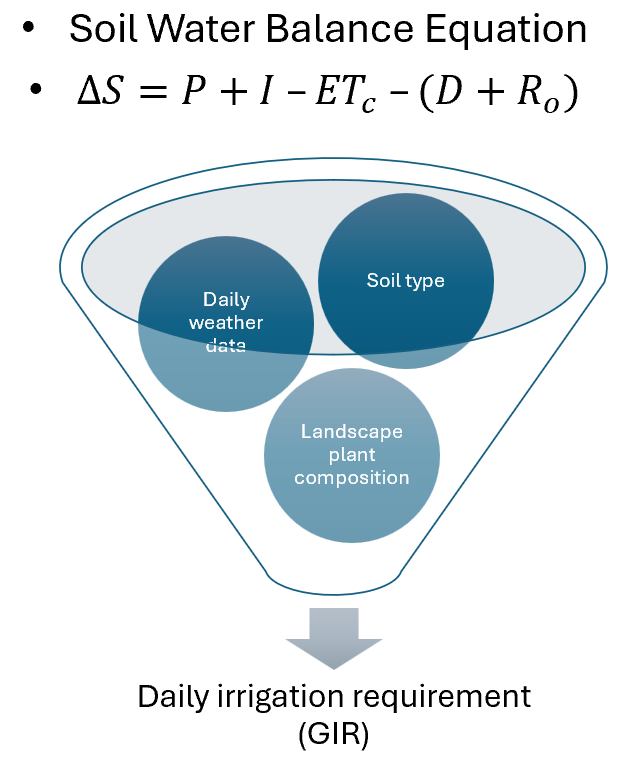
During 2017–2018 as a hydrologist with the Suwannee River Water Management District, work focused on evaluating regional water-supply sustainability through aquifer-recharge project assessment and flow (cfs) analysis. Responsibilities included analyzing groundwater levels, identifying recharge-suitable basins, and estimating potential recharge volumes to support springs and river systems. Streamflow records and continuous discharge data were processed to assess long-term trends, seasonal variability, and impacts of withdrawals on minimum flows and levels (MFLs). Hydrologic models were used to simulate recharge benefits and predict river-aquifer interactions. The work helped prioritize recharge initiatives, guide permitting, and support districtwide water-supply planning and resource protection.
Statistical Analysis
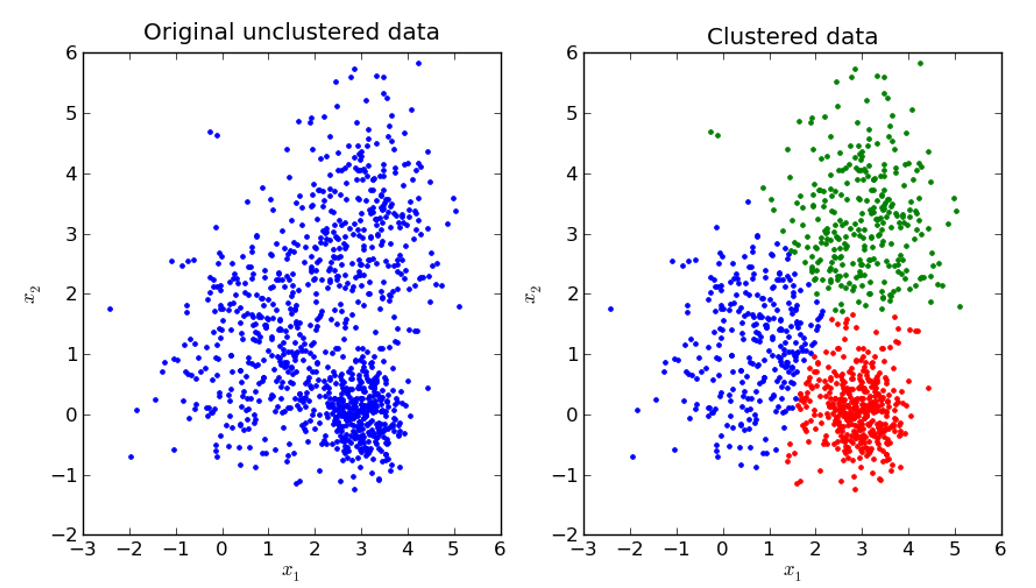
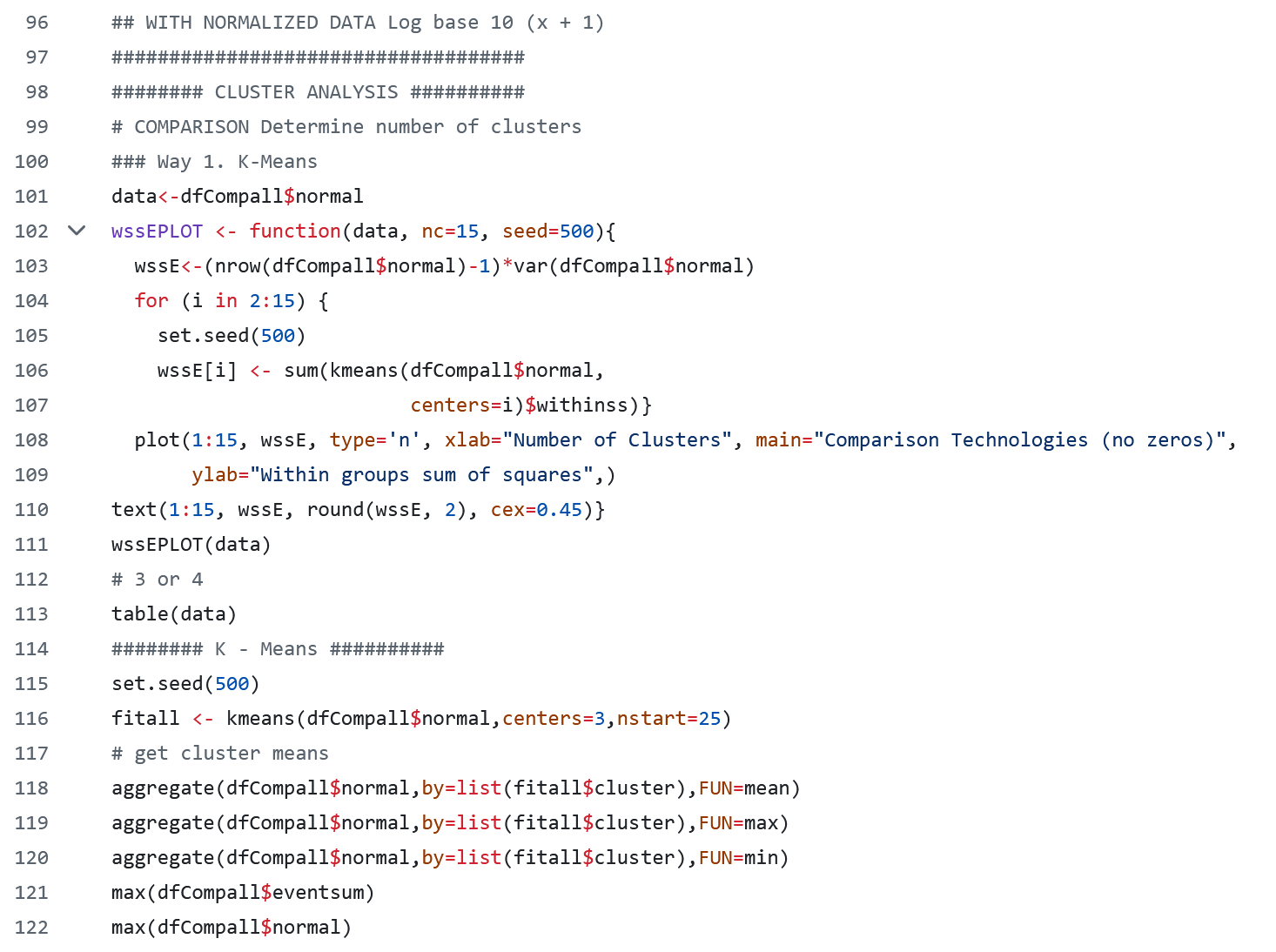
Clustering refers to partitioning data into distinct groups and how they are different or similar depends on the data at hand. K-means clustering is a well-known clustering technique where categories are created based on a pre-specific number of clusters and features of subgroups (James et al., 2013). Once the number of clusters is specified the k-means algorithm chooses a centroid for each cluster and then assigns each data point to a cluster (Abonyi & Feil 2007). The data is assigned to centroids such that the sum of squares of all cluster groups is reduced. The centroids and data are then reassigned until the squared Euclidean distance cannot be further reduced (James et al., 2013). This method of statistical analysis was used to analyze variations of water used in irrigation.
Irrigation and Water Conservation
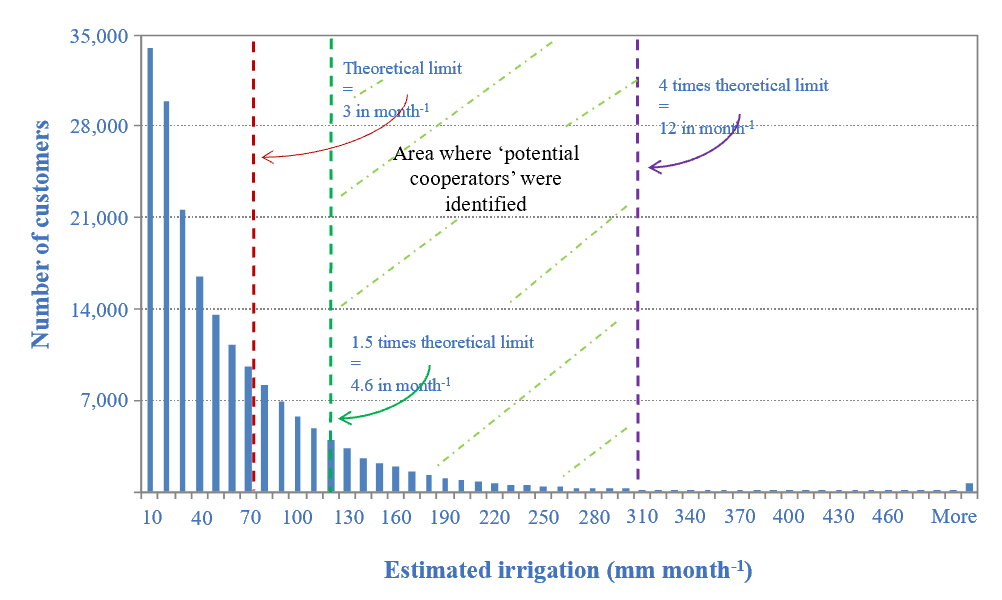
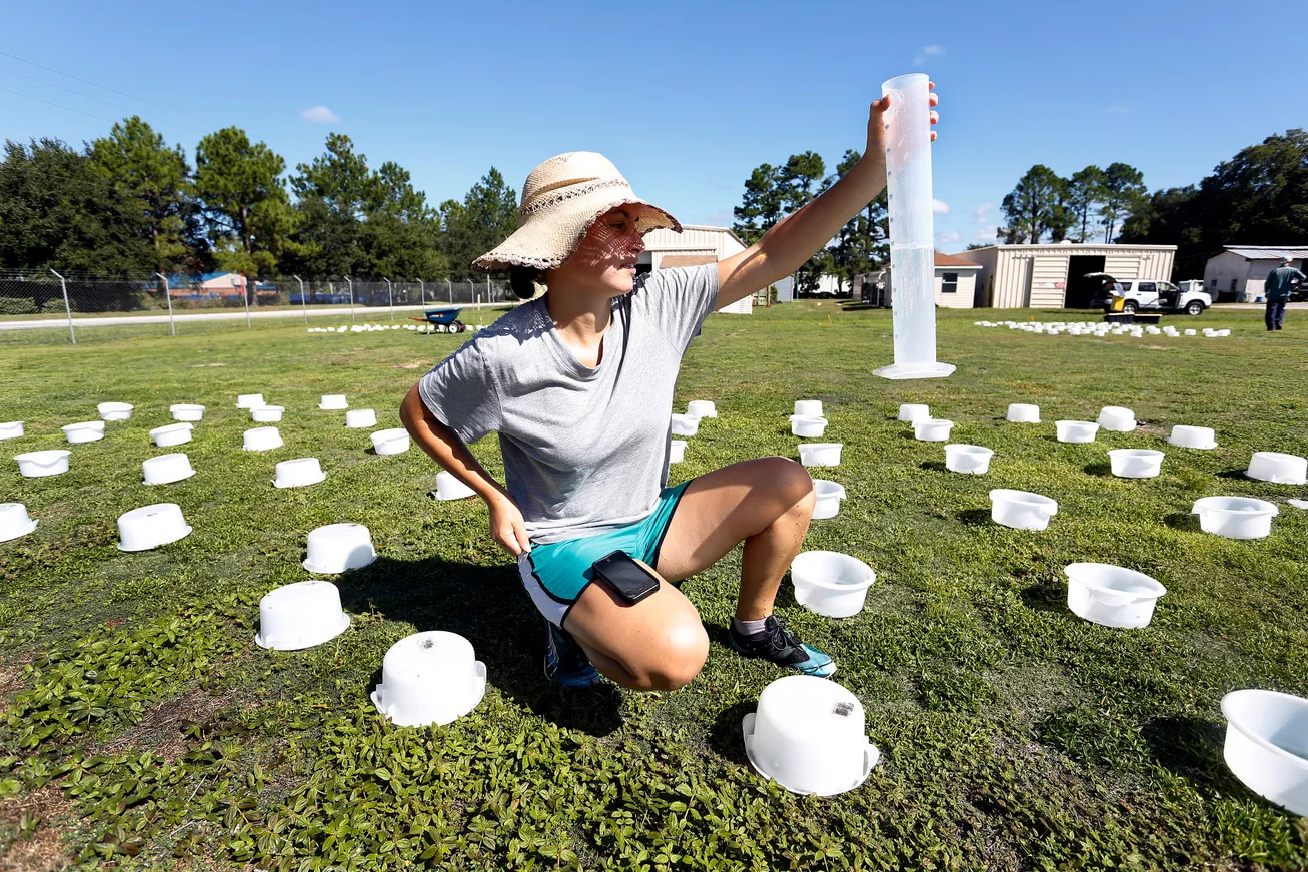
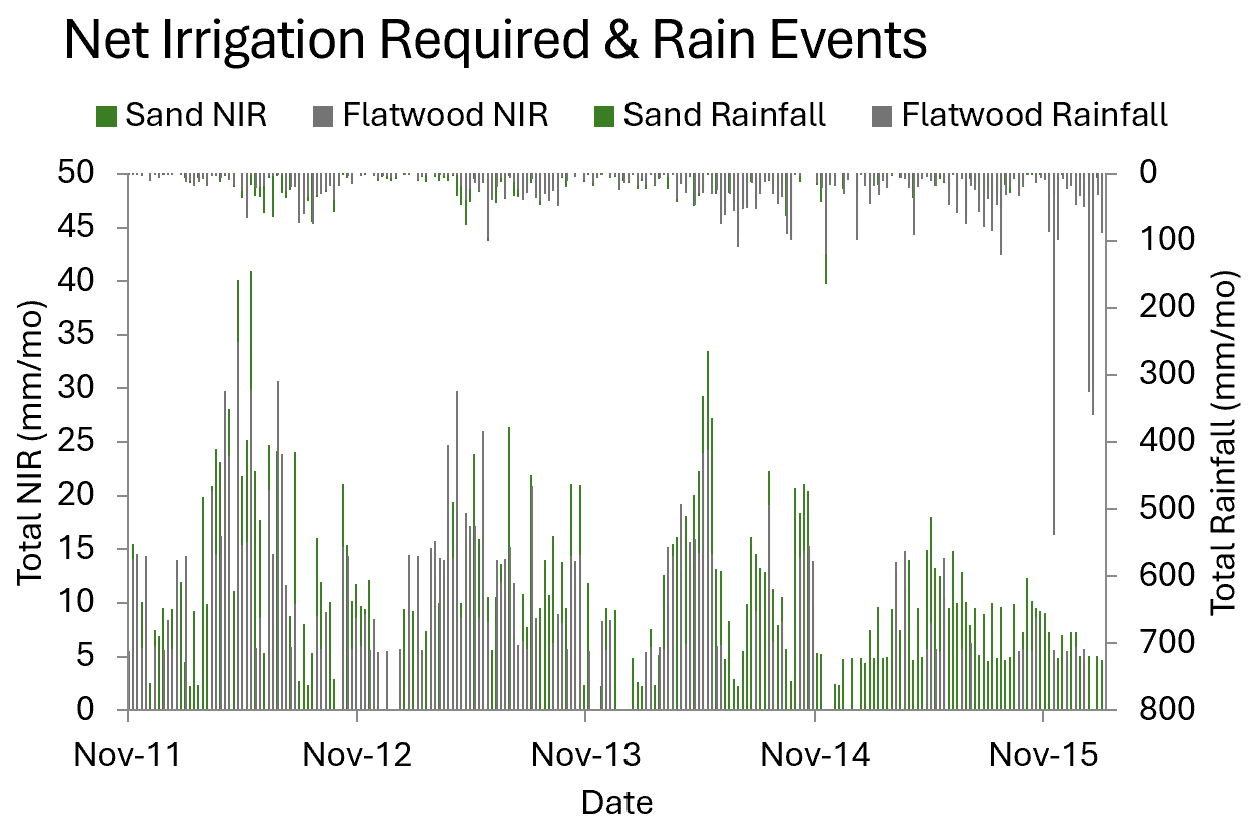
The main objective of this study was to evaluate the long-term water conservation potential of two smart irrigation controllers when implemented in single-family homes with excess irrigation. Average irrigation reductions in sandy and flatwoods soils for ET were 21% and 17% and 26% and 31%, respectively, in the ETPgm group. The SMS group reduced irrigation by 18% and 42% in flatwoods and sandy soils, respectively, while the SMSPgm treatment applied 41% and 35% less water, respectively.